
Impact of Concentrated Metallic Salts on Anion Exchange Membranes
M.A. Kostowskyj, B.K. Boggs, S. Gorer, R.L. King, J.H. Miller, and R.J. Gilliam
Calera Corporation
Los Gatos, CA 95032
Introduction
Cataloreactant metallic salts that undergo a chemical and electrochemical redox have been gaining more interest in industrial applications. Calera Corporation has developed unique and low energy processes for the production of chemical products [1-11]. In this work, the electrochemical process involves a three-liquid compartment cell as shown in Figure 1 and operates at a rate of 150-300 mA/cm2. Metal ions (Co2+, Fe2+, Cu1+, or Sn2+) are oxidized at the anode and water electrolysis occurs at the cathode, producing hydroxide and hydrogen gas (Equations 1 and 2). Both compartments are separated from a saturated brine stream by an anion and cation exchange membrane (AEM and CEM). The focus of this work is optimizing the ion exchange membranes by understanding the impact of metallic salts on resistance, fouling, and selectivity.
Anode:

Cathode:

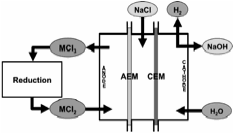
Figure 1: Schematic of the electrochemical cell showing an M2+ to M3+ oxidation
Objectives
The CEM environment shown in Figure 1 is near identical to that of the Chlor-Alkali Process. Membranes have been fully developed and optimized for this industry. N2030WX (Dupont), F8020/F8080 (Flemion), and F6801 (Aciplex) are lead candidate CEMs with minimal resistance loss, greater than 90% selectivity, and high stability in concentrated caustic. For this reason, much of the research focus has been placed on developing the AEM.
The AEM is exposed to a concentrated metallic salt anolyte (up to 7 M) and a saturated brine stream. It is responsible for passage of chloride ions from the brine and rejection of all metal ionic species in the anolyte (Figure 2). Speciation of metallic salts such as CuCl2 and FeCl3 can be very complex. The anolyte can have a wide range of cationic, anionic, and neutral complexes. The AEM fouling tendency by these different species at high concentrations needs to be investigated.
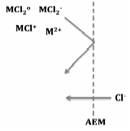
Figure 2: Projected speciation surrounding AEM
Currently no commercial AEM has been designed for this environment. Research groups have investigated the impact of various ionic metal species on AEM performance [12-14]. Most of the studies have focused on diffusion dialysis, highly acidic medium, low flux rates, and dilute metal salt concentrations.
In this work, AEMs from FuMaTech, Tokuyama Soda, Asahi Glass and Membranes International Inc. have been tested in different metal salt-base environments. Through-plane area resistance has been measured using half-cell impedance spectroscopy. Full cell configurations at 150-300 mA/cm2 were used to measure metal crossover. Membrane structures have been analyzed pre and post testing to determine fouling mechanisms.
References
1. B.R. Constantz, C. Ryan, L. Clodic, Hydraulic Cements Comprising Carbonate Compound Compositions, U.S. Patent No. 7,906,028.
2. B.R. Constantz, et al. Methods of Sequestering CO2, U.S. Patent No. 7,887,694.
3. D.W. Kirk, et al. Low Energy Electrochemical Hydroxide System and Method, U.S. Patent No. 7,790,012.
4. R.J. Gilliam, et al. Low-Voltage Alkaline Production from Brines, U.S. Patent Application Publication No. 2010/020200419.
5. R.J. Gilliam, et al. Low Energy 4-Cell Electrochemical System with Carbon Dioxide Gas, U.S. Patent No. 7,875,163.
6. R.J. Gilliam, et al. CO2 Utilization in Electrochemical Systems, U.S. Patent Application Publication No. 2010/0230293.
7. R.J. Gilliam, et al. Gas Diffusion Anode and CO2 Cathode Electrolyte System, U.S. Patent Application Publication No. 2010/0140103.
8. R.J. Gilliam, et al. Electrochemical Production of an Alkaline Solution using CO2, U.S. Patent Application Publication No. 2010/0084280.
9. R.J. Gilliam, et al. Electrochemical Hydroxide Systems and Methods Using Gas-Diffusion Cathode, U.S. Patent Application Publication No. 61/477097.
10. R.J. Gilliam, et al. Electrochemical Hydroxide Systems and Methods for Converting Acid to Chlorine Gas, U.S. Patent Application No. 61/477080.
11. R.J. Gilliam, et al., J. Electrochem. Soc., accepted 2012.
12. Z. Palaty and H. Bendova, Separation and Purification Technology, 66, 45-50 (2009).
13. V.N. Balashov, R.S. Schatz, E. Chalkova, N.N. Akinfiev, M.V. Fedkin, and S.N. Lvov, J. Electrochem. Soc., 158, B266-B275 (2011).
14. S.J. Oh, S.H. Moon, and T. Davis, J. Mem. Sci., 169, 95-105 (2000).