
299078 Influence of the Addition of Nanofiltration Concentrate On MBR Performance
Introduction
The disposal of nanofiltration concentrates often causes environmental pollution of the ecosystem due to unsustainable removal pathways e.g. landfills or surface waters [Nederlof et al., 2005]. A more sustainable option is the recirculation of the concentrate to the secondary biological wastewater treatment stage like a membrane bioreactor (MBR). Rautenbach and Mellis (1994) were the first who have mentioned an NF concentrate recirculation to an MBR treating dumpsite leachate.
A combined MBR-NF system with concentrate recirculation (Figure 1) offers high quality reusable water (NF permeate) [Asano et al., 2007] and compounds which potentially can be recovered (NF concentrate). Increased levels of multivalent ions such as Ca2+ or Mg2+ in the concentrate can enhance bioflocculation due to their presence in the recirculation stream [Urbain et al., 1993]. Furthermore, increased retention times of hardly biodegradable substances (e.g. micropollutants) might improve their degradation.
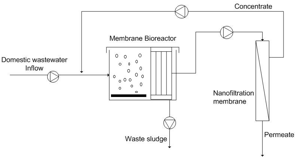
Figure 1: MBR and NF pilot scale setup with concentrate recycle
Disadvantages of the concentrate recycle, however, could be the accumulation of toxic compounds such as heavy metals or inert organic compounds like humic acids. Wastewater treatment parameters such as COD (chemical oxygen demand) and N removal are regulated by the urban wastewater treatment directive (UWWTD), which proposes certain discharge limits that have to be met to avoid excessive environmental pollution by the MBR permeate. The NF concentrate recirculation may cause toxicity and therefore inhibit the microbiological reactions responsible to meet these parameters. In addition, precipitation could occur inside the MBRs or on the nanofiltration membranes due to elevated concentration levels. This might cause more scaling in the MBR and NF system, and finally affect the feasibility of the NF concentrate recycle.
Material and Methods
This study investigates the impact of full recirculation of NF concentrate on the biological performance of a domestic MBR. Three MBRs (flat sheet Kubota microfiltration plates) were run with different recirculation ratios of NF concentrate produced from their permeates by a DOW NF270 membrane over a period of 230 days. The results of the biological MBR performance were analyzed and used to evaluate the biological feasibility of the complete recirculation of the tertiary NF concentrate.
Results and Conclusions
Results show the effect of the nanofiltration concentrate on the quality and composition of the MBR sludge as well as on regulated operational parameters like COD and ammonium removal. For instance, decreasing MLSS concentrations, and changes in VSS/MLSS ratio due to incorporation of inorganic material are a first indication that the recirculation might cause biological issues on the longer term. Influences of the recycle on the COD removal due to accumulation of non-biodegradable COD further underline this trend. Also differences in membrane performance, like the occurrence of membrane fouling in the MBR as well as in the NF step are observed. Concentrate recycle leads to more fouling and a reduced critical flux in the MBR.
References
Asano, T., Burton, F., Leverenz, H., Tsuchihashi, R., Tchobanoglous, G. (2007) Water Reuse: Issues, technologies, and applications, 1st Edition, Mc Graw Hill, New York
Nederlof, M.M., van Paassen J.A.M. and Jong, R. (2005) Nanofiltration concentrate disposal: experiences in The Netherlands, Desalination 178(1-3 SPEC. ISS.), 303-312
Rautenbach, R., Mellis, R. (1994) Waste water treatment by combination of bioreactor and nanofiltration, Desalination 59(2), 171-188
Urbain, V., Block, C.J., Manem, J. (1993) Bioflocculation in activated sludge: An analytic approach, Water Res. 27(5), 829-838
See more of this Group/Topical: General Submissions