
299559 Continuous Affinity Protein Separation By Pulse Electrophoresis in Functionalized Anodic Aluminum Oxide (AAO) Membranes
The downstream protein separation and purification cost can be as high as 80% of the total cost of the recombinant therapeutics protein production. Immobilized metal ion affinity chromatography (IMAC) for affinity protein separation is most widely used but suffers from limitations of expense, slow complex binding, purge, desorption cycles, long intra-particle diffusion time and column regeneration. Electrophoresis through inorganic nanoporous membranes has been used for non-affinity protein separation but still suffers from poor selectivity/fouling of sized-based exclusion for proteins of the same charge. Bio-inspired artificial membranes with pulsed active transport are proposed for protein purification. The asymmetric nature of AAO membranes allows thin 10nm diameter porous electrode layer to act as gate keeper while bulk 200 nm channels provide high flux during the separation process. Thin film Au deposition allows gatekeeper chemistry to be located only at the pore entrances. The receptor chemistry, Ni-NTA, at the pore entrances of anodic aluminum oxide (AAO) membrane specifically capture and concentrate His-tagged green fluorescence proteins (GFP), resulting in steric hindrance blocking other proteins from crossing the membrane. An imidazole release agent reservoir in the permeate solution is transported to the feed pore entrances by electrophoresis to release the His-tagged GFP; the released His-tagged GFP is immediately pumped to the permeate solution by electrophoresis. By applying an opposite voltage across the AAO membrane, the imidazole at the feed pore is repelled and the receptor chemistry can capture and concentrate His-tagged GFP again. Pulsed electrophoresis binding/release/pumping cycle allows for a continuous protein separation process. A separation factor of 16 is achieved using this pulse pumping process.
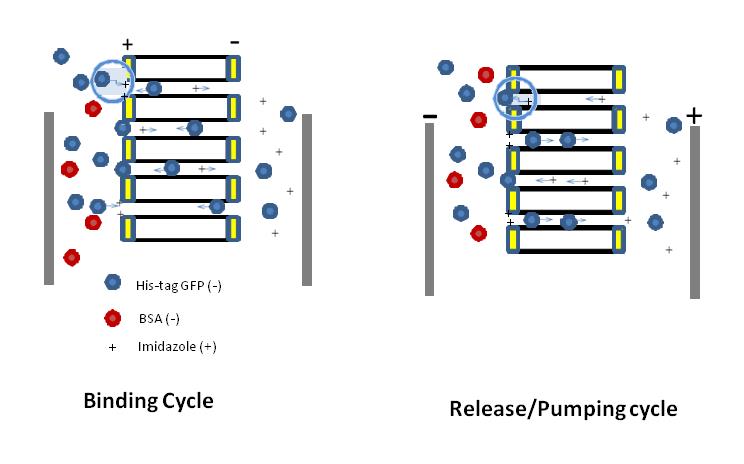
Schematic of pulse electrophoresis process across functionalized AAO membrane
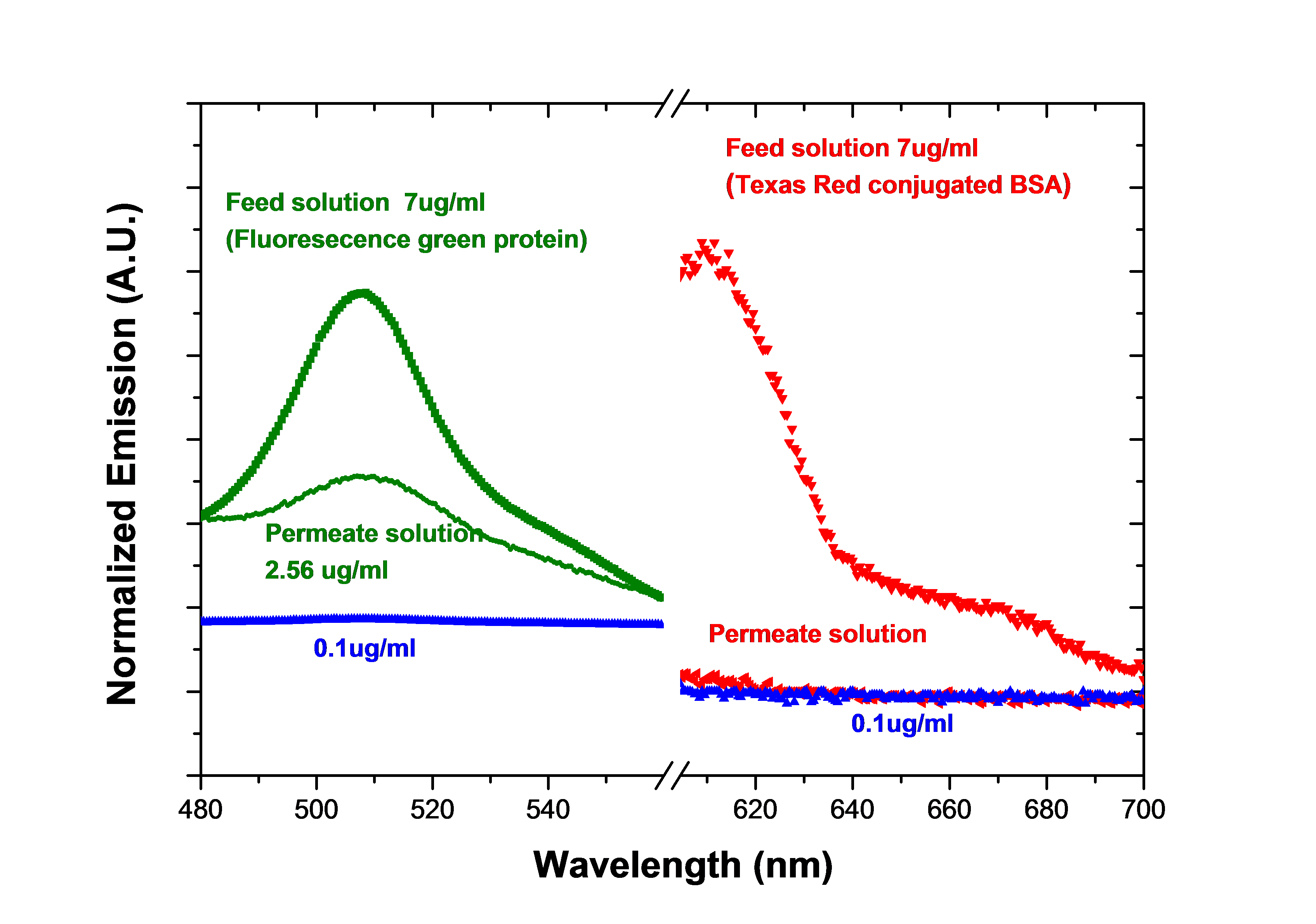
Fluorescence spectra showing the emission intensity of the feed and permeate solutions after pulse electrophoresis.
See more of this Group/Topical: Poster Submissions