
300438 Reinforced Hydrocarbon-Based Ion-Exchange Membranes for Fuel Cell Applications
Hydrocarbon-based ion-exchange membranes are seen as promising alternative to the well-established and commercially available perfluoroalkyl sulfonic acids e.g. Nafion(R). It is expected to shift the application temperature, which is approx. up to 90°C at a high humidification level for Nafion, to values well above 100°C at low humidification. In the last decades, many researchers have focused their activities on the synthesis of various sulfonated aromatic polymers that have high thermal, chemical and oxidative stability, good mechanical properties and low cost such as polyimides, poly(arylene ether)s and others as summarized in several reviews [see e.g. 1]. Due to the higher ion-exchange capacity that is needed for non-fluorinated membrane materials compared to poly(perfluoroalkyl sulfonic acid)s like Nafion® to achieve a similar performance, these membranes have a much higher water uptake combined with a much lower dimensional stability. A second issue in ion-exchange membranes, which is closely related to swelling, is the mechanical properties in hydrated state. Since water acts as plasticizer in these materials, the membranes lose their mechanical strength on water-uptake. Several methods like chemical crosslinking [2] or ionic crosslinking [3] have been employed in the past in order to overcome swelling and mechanical property issues. These two methods may lead to more brittle materials (chemical crosslinking) and loss of ion-exchange capacity (ionic crosslinking). Reinforcement of ion-exchange membranes by incorporation of inert porous materials into the membrane has been mainly described in the patent literature [4].
In this contribution, we describe the effect of reinforcement of highly sulfonated hydrocarbon membranes on the mechanical properties, water uptake, swelling as well as electrochemical properties. The chemical structure of the membrane material is shown Figure 1.
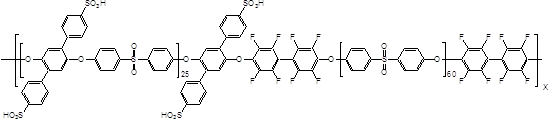
Figure 1: Chemical structure of the membrane material
Table 1: Mechanical properties of non-reinforced and reinforced membranes in the dry and wet state
Material
| Young's Modulus (MPa)
| sMa) (MPa)
| eMb) (%)
| sBc) (MPa)
| eBd) (%)
|
PEEK
| 575 ± 100
| 49.4 ± 5.6
| 18.9 ± 1.9
| 15 ± 5
| 24 ± 1
|
Non-reinforced dry
| 831 ± 97
| 29.2 ± 2.7
| 5.2 ± 0.5
| 16.8 ± 4.1
| 15.5 ± 3.7
|
PEEK reinforced dry
| 933 ± 45
| 38.5 ± 2.4
| 5.7 ± 0
| 36.9 ± 2.8
| 6.9 ± 1.2
|
Non-reinforced wet
| 305 ± 46
| 18.7 ± 2.3
| 108.7 ± 15.8
| 17.8 ± 3.0
| 39.7 ± 3.0
|
PEEK reinforced wet
| 603 ± 45
| 24.8 ± 1.0
| 13.1 ± 5.0
| 24.8 ± 0.9
| 13.6 ± 5.2
|
a) tensile strength; b) strain at tensile strength; c) stress at break; d) strain at break
The mechanical properties of hydrated membranes were significantly improved by the reinforcement with a PEEK fabric as outlined in table 1. While first samples were rather thick (100 µm), we were able to reduce the thickness of the reinforced membranes to about 25 µm without loosing mechanical properties.
The water uptake at 80°C was reduced by factor 2 as compared to the non-reinforced samples. More important the in-plane swelling could be reduced to less than 10% at 80°C (non-reinforced 45% width, 95% length) while the swelling in z-direction (thickness) was higher for reinforced samples.
Although the overall IEC was reduced by the incorporation of the reinforcing material (1.92 mmol/g to 1.74 mmol/g), the conductivity was not changed (figure 1).
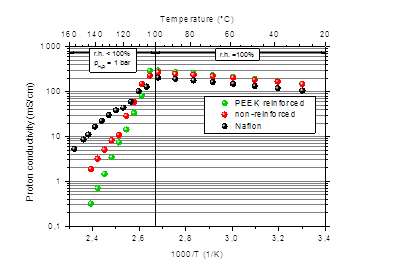
Figure 1: Proton conductivities of non-reinforced and reinforced membranes
Acknowledgements:
The author like to thank the German Research Foundation (grant no. ME 2107/8-1) for financial support of this project. The provision of reinforcing materials by SEFAR AG Switzerland is gratefully acknowledged.
References:
[1] G. Maier, J. Meier-Haack, Adv. Polym. Sci., 216, 1 – 62 (2008)
[2] K.K. Lee, J. Kerres, J. Membr. Sci., 294, 75 – 83 (2007).
[3] W. Zhang, V. Gogel, A.K. Friedrich, J. Kerres, J. Power Sources, 155, 3 – 12 (2006)
[4] Y. Akita, T. Nagasawa, T. Suzuki, T. Matsuura, US 2011/0008708, 2008.
See more of this Group/Topical: General Submissions