
302147 Inside-Out Vs. Outside-in – A Pilot-Scale Evaluation of UF/MF Membranes for Seawater Desalination Pretreatment
Inside-out vs. Outside-in – A Pilot-scale Evaluation of UF/MF Membranes for Seawater Desalination Pretreatment
Xing Wang, Gyu Dong Kim, Russell R. Ferlita, Ryan C. Eck, and Hyung Keun Roh
Research and Development, Doosan Hydro Technology, 912 Chad Lane, Tampa, FL 33619
Session: Membrane Processes – Ultrafiltration/Microfiltration
Category: Oral
Abstract
The application of polymeric membranes in seawater desalination pretreatment has become increasingly popular in recent years. Compared to conventional media filtration, membrane pretreatment offers better water quality for the downstream reverse-osmosis (RO) process. In addition, source water conditioning such as coagulation and sedimentation is not required when membrane pretreatment is used, providing the potential benefit of lower chemical consumption than media filtration. The most commonly-used polymeric membranes for seawater RO (SWRO) pretreatment are pressurized ultrafiltration (UF) and microfiltration (MF) membranes with hollow fibers made of polyether sulfone (PES) and polyvinylidene fluoride (PVDF). Inside-out and outside-in membranes, with their respective pros and cons, characterize opposite filtration flow directions. Although abundant research exists on the comparison of UF and MF membranes, little has been done on the comparison of inside-out and outside-in membranes.
In order to compare the performance of inside-out and outside-in membrane types, a pilot study was conducted by testing an array of UF and MF membrane products of both flow directions with a challenging Florida seawater source from the Gulf of Mexico. A compact pilot system was designed and fabricated to accommodate three different membranes to be tested in parallel with the same feed water (a drawing of the system is shown in Figure 1). Three membranes of both inside-out and outside-in types were tested on this automated pilot system with operational data recorded such as trans-membrane pressure (TMP), flow, turbidity, etc. Grab samples of membrane filtrate were taken to analyze water quality parameters like silt density index (SDI), total organic carbon (TOC), and UV254.
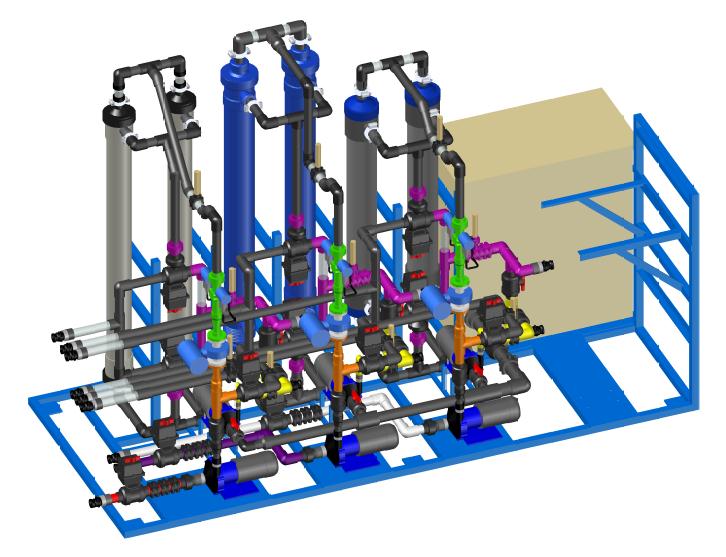
Figure 1 3D Drawing of the UF/MF pilot system used in this study
With the recorded data and grab sample analyses, various membrane performance parameters were evaluated and compared among all membranes tested. For instance, membrane permeability as an important membrane property was compared among all tested membranes by dividing filtration flux with TMP. Since the system was tested under fixed fluxes, TMP trends were a good indication of membrane permeability. Figure 2 is a comparison between inside-out and outside-in membrane filtration TMP at 50 LMH flux. Judging from this data, it is evident that inside-out membranes had considerably lower TMP and more stable operation. They also exhibited substantially higher permeability (approximately 133%) than outside-in membranes, which in turn led to an average of 57% lower specific energy consumption (Figure 3). In other words, choosing inside-out membranes for an SWRO plant can save operational expenditure (OPEX). Furthermore, inside-out membranes produced cleaner filtrate, used less cleaning chemicals, and could operate stably at higher fluxes. Nevertheless, disadvantages associated with inside-out membranes could include smaller membrane area, shorter membrane life, lower chlorine resistance, and lower feed turbidity allowance.
In conclusion, while the results of this study were generally in favor of inside-out UF membranes over outside-in MF membranes, the selection of SWRO pretreatment membrane type for a specific feed water needs to be an integrated decision based on raw water quality, plant location, membrane life expectancy, and client requirements. Assisted by the data obtained from this study, necessary life-cycle analyses can be performed to optimize the membrane selection process.
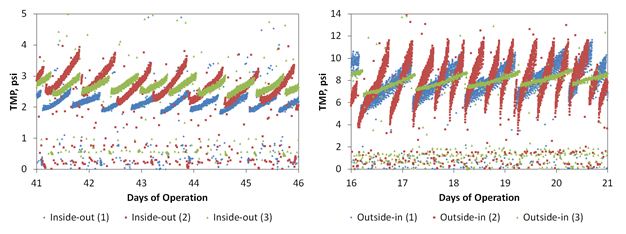
Figure 2 Comparison of filtration TMP trends between inside-out (left) and outside-in (right) membranes at 50 LMH flux
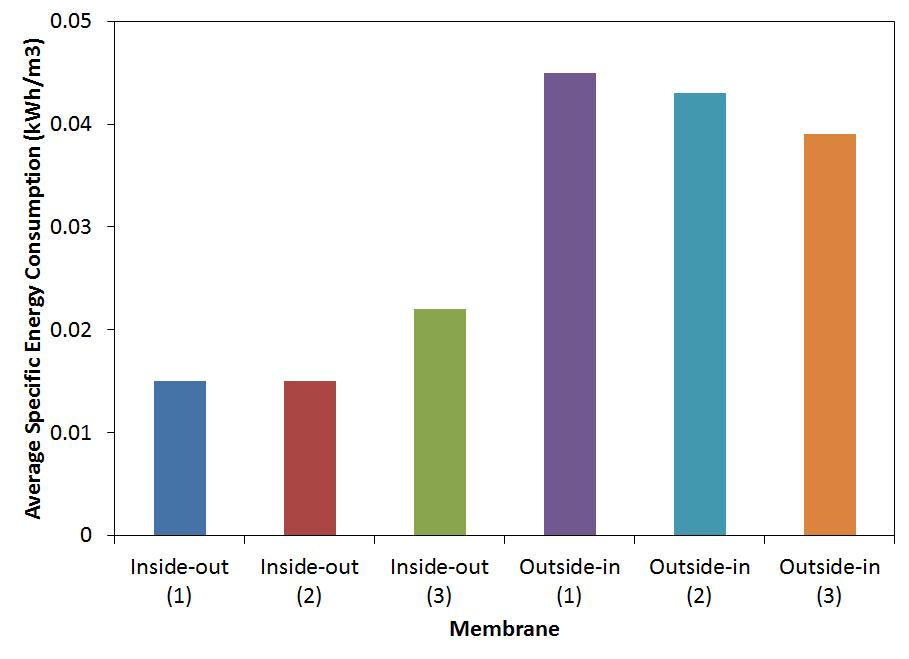
Figure 3 Comparison of average energy consumption per unit volume filtrate produced among all tested UF and MF membranes
See more of this Group/Topical: General Submissions