
303723 Size-Selective Ionically Crosslinked Polymer Films for Light Gas Separation: Breaking the Upper Bound in H2 Purification
Size-Selective Ionically Crosslinked Polymer Films for Light Gas Separation: Breaking the Upper Bound in H2 Purification
Daejin Kim,1 Ping Tzeng,1 Kevin J. Barnett,1 You-Hao Yang,1 Jaime C. Grunlan1,2, and Benjamin A. Wilhite,1
1Artie McFerrin Department of Chemical Engineering, Texas A&M University, 3122 TAMU, College Station, TX 77843, USA. 2Department of Mechanical Engineering, Material Science and Engineering Program, Texas A&M University, 3123 TAMU, College Station, TX 77843, USA.
Polymer-based membranes have been broadly applied into petroleum refinery, syngas production, and ammonia plant for hydrogen separation with their advantages of low cost, mass production, and good quality control. However, most of the polymeric membranes suffer from their low selectivity and weak mechanical strength. The general tendency of ‘upper bound limits' for homogeneous polymeric membranes established by Robeson[1] yields a trade-off line between gas permeability and permselectivity. In order to overcome the upper bound limits of polymeric membranes in gas separation, alternative membranes have been diversely studied, such as metallic membranes, zeolite imidazolate framework (ZIF) membranes, metal-organic framework (MOF) membranes, carbon molecular sieve (CMS) membranes, and organic-inorganic mixed matrix membranes (MMM), etc. [2]
Over the last two decades, layer-by-layer (LbL)
assembly has been extensively investigated because of its simplicity and
versatility for developing multifunctional thin films for antimicrobial,
antireflection, flame retardant, fuel cell electrolytes, and gas barrier
applications [3]. Application of the LbL technology to gas purification
membranes would provide the capability of tuning gas permeability and
selectivity by varying the cation-anion materials and
the number of bilayers. In this study, a branched polyethylenimine
(PEI) / poly(acrylic acid) (PAA) assembly is explored
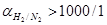
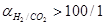
for investigating hydrogen separation through the LbL membranes. When the results
obtained from PEI/PAA films were compared in the Robeson's plot for H2/N2
and H2/CO2 separation, the LbL films exceed the upper bound
limits, indicating a superior capability of H2 separation (
0
References
1. L.M. Robeson, Correlation of separation factor versus permeability for polymeric membranes, J. Membr. Sci. 62, 165-185 (1991).
2. N.W. Ockwig, T.M. Nenoff, Membranes for hydrogen separation, Chem. Rev. 107, 4078-4110 (2007).
3. P. T. Hammond, Form and function in multilayer assembly: New applications at the nanoscale, Adv. Mater. 16, 1271-1293 (2004).
See more of this Group/Topical: General Submissions