
The global energy demand is continuously increasing, due to the growth of both population and industrialization. The supply of CO2-neutral energies has to become more important in the future, and bio-fuels from biomass may be a part of those energies.
Different processes have been developed to produce bio-oils from different biomass, among them fast pyrolysis and subcritical hydrothermal liquefaction are studied here. Fast pyrolysis can produce until 75%wt of bio-oil (pyro-oil), composed typically of 56%wt of C, 38%wt of O and 6%wt of H [1]. Subcritical hydrothermal liquefaction, which consists in thermal decomposition of biomass in water in high pressure and temperature condition but below its critical point (647 K and 22.1 MPa), can reach 35%wt of bio-oil (liq-oil). This liq-oil, less oxygenated than pyro-oil, is composed typically of 74%wt of C, 17%wt of O and 9%wt of H [1]. Those two types of bio-oils must be upgraded to obtain bio-diesel, thanks to catalytic hydrodeoxygenation (HDO) which reduces the proportion of oxygen. In this context, fast pyrolysis and subcritical hydrothermal liquefaction can appear complementary, considering biomass water content, composition, etc.
In order to compare those processes, experimentations were led from the same biomass, beech sawdust. Fast pyrolysis is achieved thanks to the cyclone reactor [2] which is a continuous reactor with an oil recover system separating three fractions of pyro-oil (Figure 1). Up-stram of the cyclone, the installation is composed of the biomass (tank and endless screw) and nitrogen (inert gas) feeds. Particles, drived by nitrogen, are pyrolysed along the cyclone wall, heated by induction. A by-pass system allows preheating and equilibrium set-up before feeding of biomass. Thanks to the separator properties of the cyclone, solids are isolated from gaseous products and recovered in the solids collector. Gaseous products, evacuating throught the upper art of the cyclone, pass throught three water cooled heat exchangers in series to recover the first fraction of oil in a collector, “heavy oils” (HO). Then the gas flows throught refrigered coils inside which the "light oils" (LO) fraction is recovered. In order to recover the last fraction, “aerosols" (AE), both electrostatic and membrane filters are used in series. At the exit, clean gases are finally sampled and analysed by micro-GC.
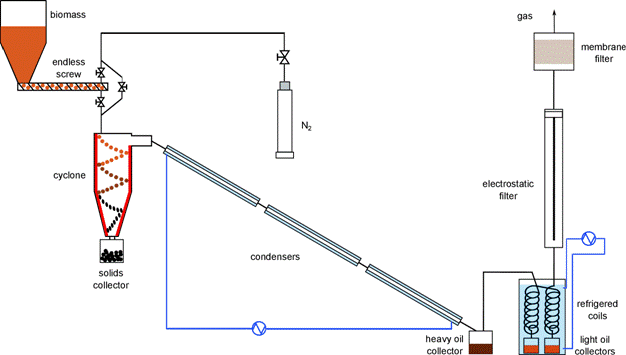
Fig. 1: Fast pyrolysis installation scheme
In order to confirm and complete previous works on the cyclone [3], new experimentations were led at different temperatures (870-1040 K) and different ratios between nitrogen and biomass mass flowrates (7.3-18.8). These experiments show the presence of maximum mass yield of pyro-oil near 65%wt (including HO, LO and AE) with 20%wt of gas and 15%wt of char. This maximum is observed near 920 K, with a ratio of 18.8, and explained by a partial conversion of biomass below this temperature and a too high gas production above it. Above 1040 K the gas yields are higher than pyro-oil ones; process is rather called pyro-gasification than pyro-liquefaction.
Subcritical hydrothermal liquefaction is achieved in a 150 ml autoclave where biomass is introduced prior to the catch of the reactor with the locking straps (Figure 2). Thanks to a volumetric pump, nitrogen or distilled water can be introduced into the autoclave at a desired pressure. After inerting the reactor with nitrogen and setting the initial working pressure, 100 ml of distilled water are added into the reactor, heated by an electric resistance. Once achieved, the working temperature is maintained a the experiment duration time, then the reactor is cooled down by a refrigering sytem using air and then water. Once the reactor at the ambiant temperature, gases are sampled and analysed by GC-TCD. The reactor is opened in order to collect the products (liquids and solids). Based on [4], pure acetone is used to rinse the reactor and wash solids. After filtration, three phases are obtained : solids, aqueous phase and organic phase. Solids are placed into a drying oven. Evaporation at reduced pressure is used to remove acetone from the organic phase and water from the aqueous phase, in order to get respectivly two fractions of oil, "heavy oils" (HO) and "water soluble organics" (WSO).
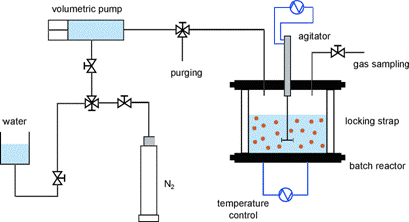
Fig. 2: Subcritical hydrothermal liquefaction installation scheme
Temperature influence was studied within a range of 420 to 600 K, for 15 to 60 minutes at the working temperature. Using this installation, near to 50%wt of liq-oils (including Heavy oils et Water soluble organics) were obtained, at 570 K, with 35%wt of gaz and 15%wt of char. The first similitude with fast pyrolysis is the existence of an optimal temperature to reach high conversion of biomass with a minimum of gas mass yield.
For both installations, mass balances are based upon mass measurement of solids and bio-oils, and evaluation of the gas composition. Thanks to the known amount of nitrogen used in those installations (flowrate for fast pyrolysis and initial pressure for hydrothermal liquefaction), the produced mass of gas can be determined by proportions from the gas composition.
Ultimate analysis and HHV-measurement are made on solids (biomass, mild-reacted biomass and char) and fractions of pyro-oils and liq-oils. First, those analyses allow to confirm the use of a correlation Dulong-like between HHV (High Heating Value) and ultimate analysis. Combined with mass balances, ultimate analysis led to atomic balances close to 92% for C, 97% for H and 108% for O. Then, ultimate analysis are very useful to compare products and especially fractions of pyro-oil and liq-oil: liq-oil HO are closer to pyro-oil AE while liq-oil WSO are closer to pyro-oil HO and LO. Ultimate analysis of solids confirm that the existence of pyro-oils maximum yield is partly due to the partial conversion of biomass : the composition of solids recovered at 870 K (CH1.26O0.57) is closer to initial biomass one (CH1.48O0.72) than chars ones obtained at 920 K (CH0.44O0.17) and 1040 K (CH0.24O0.17).
Gas chromatographies and H1 NMR allow to identify major compounds of bio-oils and/or chemical families like phenolic compounds, acids, sugars, ... Other analyses like pH and Karl-Fischer are used to get a complete characterization of bio-oils.
Thanks to those results, energy balances of both reactors were made with a focus on the HHV fraction recovered in bio-oils. Besides, properties and major components of each kind of bio-oils allow to understand their behaviour during the HDO step, with a focus on the required hydrogen, directly correlated to bio-oil oxygen content.
For futur work, those results are used as a basis for energy and exergy analysis which must be achieved to ensure the viability of the two processes for the production of bio-diesel. Those analysis are led thanks to a commercial simultion software, in which different parameters can be studied like biomass humidity or bio-oil recovery system.
[1] Huber, G. W., Iborra, S., and Corma, A. (2006). Synthesis of transportation fuels from biomass : Chemistry, catalysts, and engineering. Chemical Reviews, 106(9) :4044–4098.
[2] Lédé, J. (2000). The cyclone : A multifunctional reactor for the fast pyrolysis of biomass. Industrial & Engineering Chemistry Research, 39(4) :893–903.
[3] Lédé, J.; Broust, F.; Ndiaye, F.-T. & Ferrer, M. (2007). Properties of bio-oils produced by biomass fast pyrolysis in a cyclone reactor. Fuel, 86, 1800-1810
[4] Sun, P., Heng, M., Sun, S.-H., and Chen, J. (2011). Analysis of liquid and solid products from liquefaction of paulownia in hot-compressed water. Energy Conversion and Management, 52(2) :924 – 933.
See more of this Group/Topical: Topical 3: Advances in Sustainable Energy