Improving Outcomes and Reducing Complications in Aesthetic Surgery with a "Pre"Habilitation Protocol
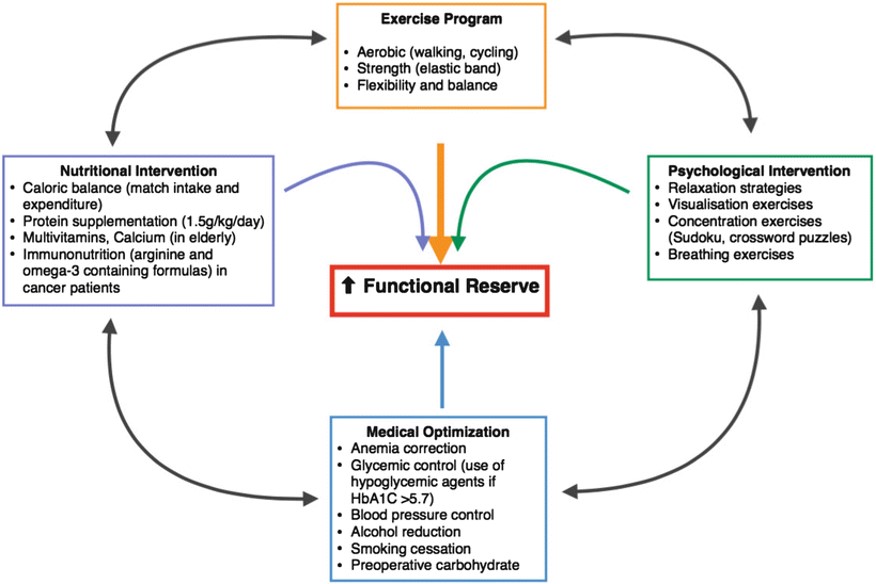
Major surgery is associated with a significant decline in functional capacity. While most aesthetic procedures are not considered "major" surgery, some of our procedures do carry significant risks and have associated morbidity. Multiple surgical specialties have begun to implement preoperative patient optimization in an effort to reduce postoperative complications. This has been defined as Prehabilitation. Prehabilitation is defined as a series of activities designed to enhancing an individual’s functional capacity to enable him or her to withstand a forthcoming stressor, such as surgery. Most prehabilitation programs have moved towards a multimodal approach, including medical optimization, preoperative physical exercise, nutritional support, and stress/anxiety reduction. In both the colorectal and gynecologic surgical realms, outcome benefits been shown including reduced length of stay, less postoperative pain, and fewer postoperative complications. There are no studies in the plastic surgery arena to date regarding the potential impact of prehabilitation.
Methods/Technique:
We developed detailed goals for a prehabilitation program including:
- Improving cardiovascular, pulmonary, and/or musculoskeletal function.
- Improve balance and reduce the risk of falls.
- Reduce anxiety and improve coping with specific cognitive behavioral strategies.
- Improve quality of sleep with sleep hygiene education.
- Optimize surgical outcomes with smoking cessation interventions.
- Optimize diet with nutrition counseling.
- Educate around postoperative routines to prepare a safe home environment.
Following institutional protocol, we enrolled 65 patients undergoing combination body contouring procedures and assigned each of them our prehabilitation protocol (Figure 1). The program was designed to occur over an eight-week period. The patients then underwent their scheduled procedures. Outcome variables including hospital length of stay, re-operation within 30 days, major complications, and minor complications were measured. A historical cohort of similar preoperative morbidity-matched was used as a source for control data.
Results/Complications:
The results are summarized in the following table. Significant differences were found in the complications per patient and the number of patients with any complication.
|
Variable |
Control |
Intervention |
p |
|
n=63 |
n=62 |
||
|
Hospital LOS |
13 (20) |
8 (8) |
0.048 |
|
Surgical re-intervention |
6 (10%) |
2 (3%) |
0.273 |
|
Patients with ANY complication |
39 (62%) |
19 (31%) |
0.001 |
|
Complications per patient |
1.4 (1.6) |
0.5 (1.0) |
0.001 |
|
Lost to follow-up |
1 (2%) |
1 (2%) |
1.000 |
Likert scale patient satisfaction also revealed significantly improved scores in patients in the intervention group frequently attributed to "feeling more connected" to their surgeon and office.
Conclusion:
In our study, a prehabilitation protocol reduced complications and improved overall satisfaction with combination body contouring procedures. While there was almost certainly an increase in preoperative functional capacity in our study patients, this was not discretely measured. As has been well established with enhanced recovery after surgery protocols, a more rapid return to functional capacity after surgery is considered a major factor in complication reduction. With prehabilitation, the patient's preoperative functional capacity is increased. This implies that the physiologic impact of surgery reducing functional capacity results in higher postoperative capacity, and a likely quicker return to baseline capacity.