From Glucose to Gauze: Exploring the Utility of DPP-4 Inhibitors in Scarring and Wound Healing
Methods/Technique: A systematic review was performed in PubMed, Cochrane Central, and Embase according to PRISMA guidelines. Synonyms related to ‘DPP4-inhibitors’, ‘postoperative scars’, and ‘wound healing’ were used to identify relevant studies. Three reviewers, A.R., T.G., and L.M., independently conducted abstract screenings and full-text reviews. We included human, animal, and basic science studies and excluded studies that focused on using DPP4i only in the context of diabetic foot ulcers.
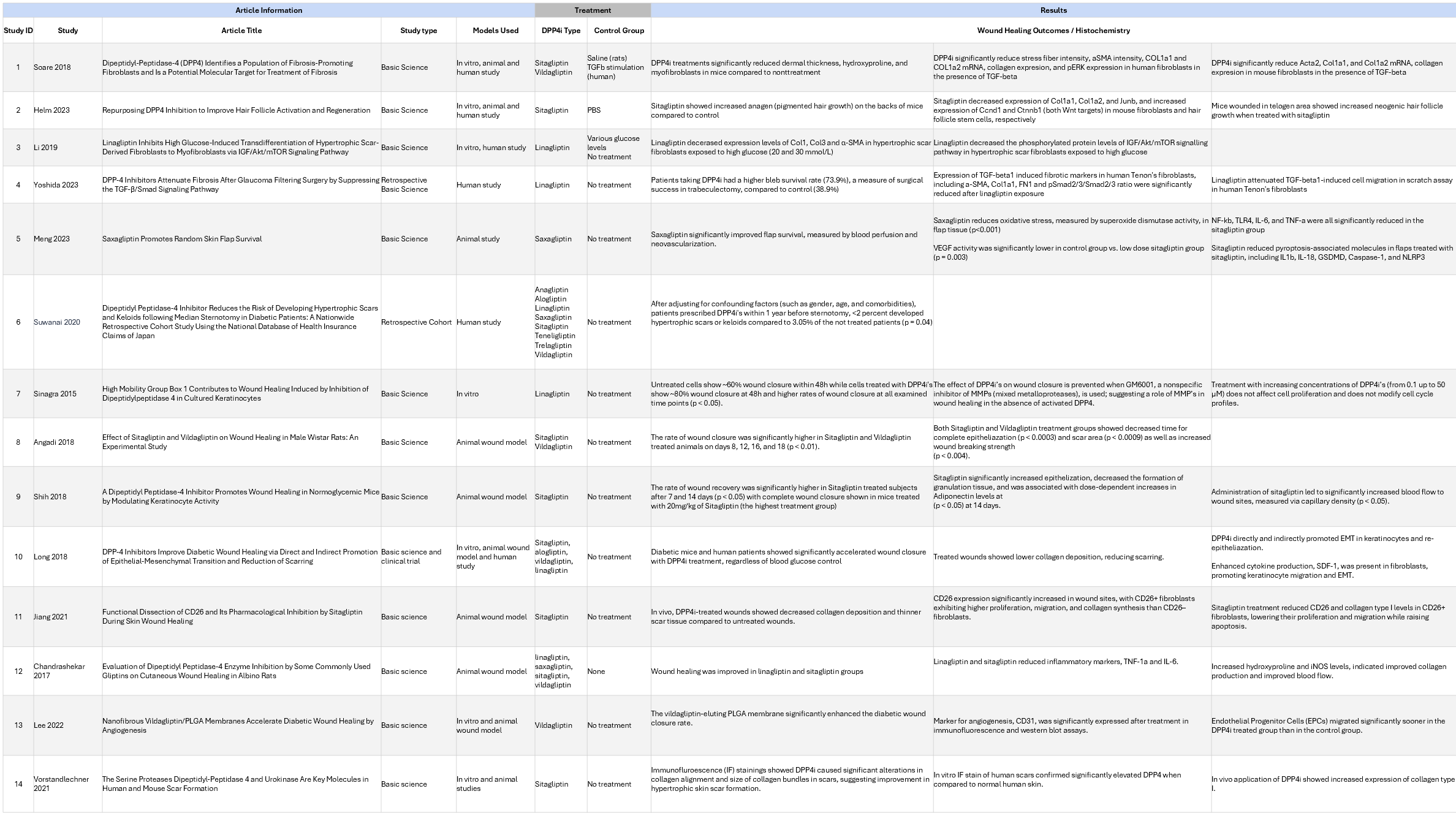
Results/Complications: From an initial 1776 studies, 1433 were screened, and 14 were included for data extraction. Of these 14 studies, one incorporated a clinical trial, one conducted a retrospective chart review, and 13 included basic science. DPP4i use was associated with faster rates of wound closure across multiple studies. One retrospective study identified DPP4i as protective against postoperative hypertrophic scars in diabetic and nondiabetic patients. At the same time, numerous studies also found that DPP4i mitigated fibrotic markers with reduced collagen deposition, thinner scar tissue, and improved collagen fiber alignment and orientation. DPP4i promoted keratinocyte migration into the wound bed and endothelial-mesenchymal transition.
Conclusion: With growing evidence that DPP4 acts as a mediator of inflammation and fibrosis, DPP4i may offer additional therapeutic benefits across multiple aspects of wound healing, including scar prevention. Although there are limited clinical studies on DPP4i outside the context of diabetic wounds and foot ulcers, the studies presented here suggest a significant benefit of DPP4i in postoperative scar management and wound treatment.