
Tunable thermal bioswitches for in vivo control of biological therapeutics
Keywords: Protein engineering, Medicine
Temperature is a unique input signal that could be used by therapeutic agents, including engineered proteins and cells, to sense and respond to patient conditions or spatially targeted external triggers such as focused ultrasound. A critical capability for many envisioned applications is the ability to control the function of such therapies in situ to enable spatially and temporally specific activation at anatomical and disease sites such as the gastrointestinal tract or tumors. However, among existing control methods, systemic chemical administration typically lacks the spatial precision needed to modulate activity at specific anatomical locations, while optical approaches suffer from poor light penetration into tissues. On the other hand, temperature can be controlled both globally and locally—at depth—using technologies such as focused ultrasound, infrared light and magnetic particle hyperthermia. In addition, body temperature can serve as an indicator of the patient’s condition. Here, we describe the development of temperature-dependent protein actuators for therapeutic applications, ranging from transcriptional regulation of engineered microbial therapeutics to generalized control of protein-protein interactions.
To enable the design of temperature-responsive therapeutic agents, we developed two orthogonal families of high-performance transcriptional repressors with tunable thresholds within the biomedically relevant range of 32–46 °C (Figure 1). We demonstrated the potential utility of these devices in several in vivo scenarios relevant to mammalian microbial therapy, including spatially selective activation within a mammalian host using focused ultrasound (Figure 2) and response to a host’s fever (1). Based on these results, we envision the use of our thermal bioswitches to control a wide variety of functions in engineered cellular therapeutic agents.
We further demonstrate that the temperature-sensing components of these transcriptional repressors can be isolated and repurposed in a generalized strategy to exert direct and rapid control over protein function in the context of both bacterial and mammalian cells. This technology can be utilized to engineer a broad range of biological therapies with modular, non-invasive actuation and response to host conditions.
1. Piraner, D.I., Abedi, M.H., Moser, B.A., Lee-Gosselin, A. & Shapiro, M.G. Tunable thermal bioswitches for in vivo control of microbial therapeutics. Nature Chem Biol 13, 75-80 (2017).
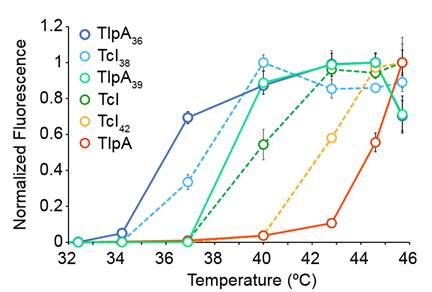
Figure 1: Transcriptional responses of gene circuits utilizing a panel of thermal bioswitch variants.
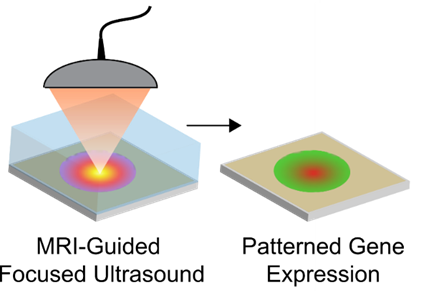
Figure 2: Spatiotemporal thermal control via focused ultrasound heating.
See more of this Group/Topical: Food, Pharmaceutical & Bioengineering Division