
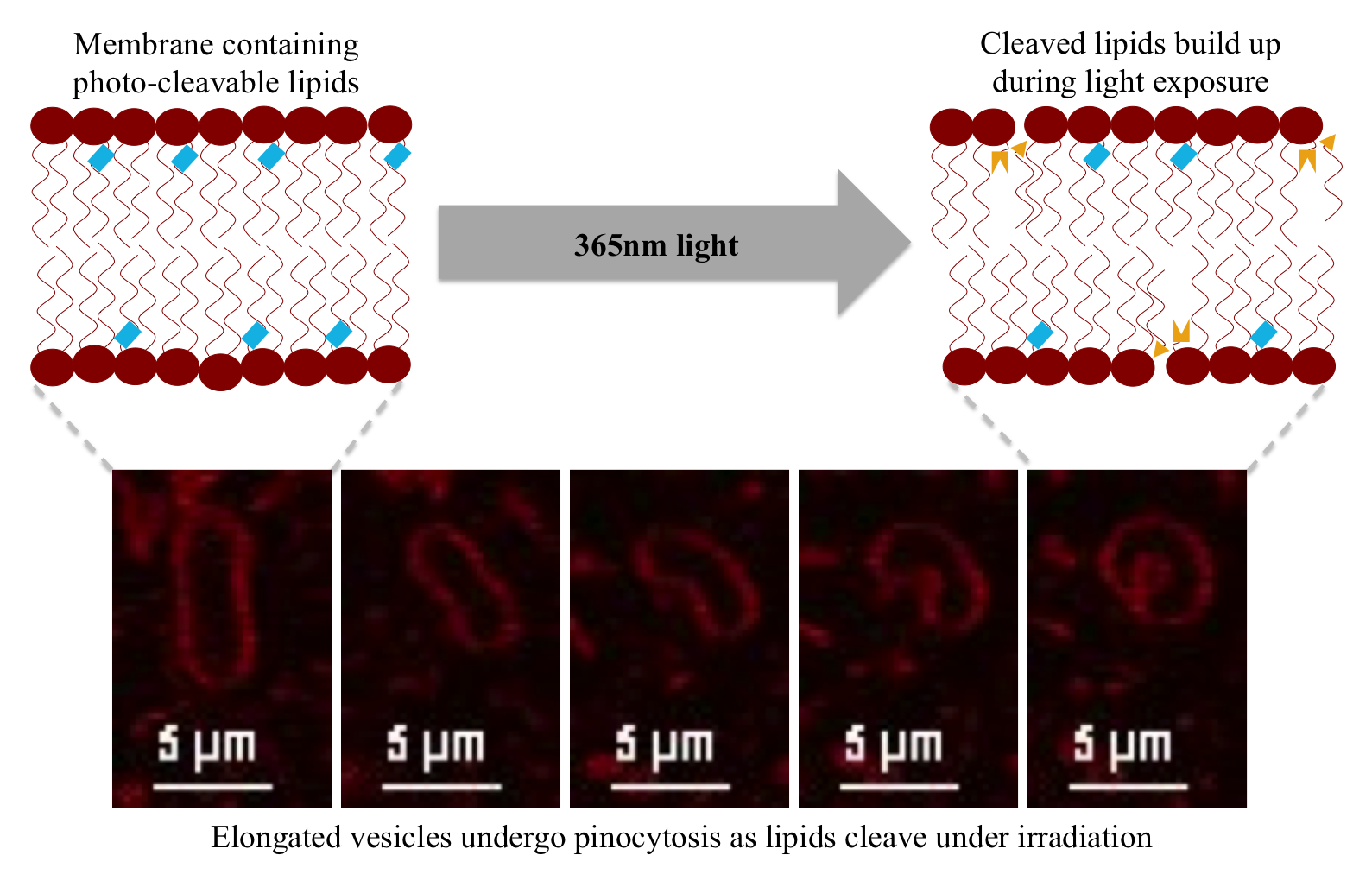
An essential step in the development of artificial cells is making these cells capable of taking up resources for sustained transcription and translation. Previous work on incorporation of appropriate machinery into the membrane to make this possible has proven to be complex and complicated. Here, we present the introduction of photocleavable units into the phospholipid structure through which photo-induced pinocytosis behavior is achieved. Upon exposure to 365nm or 405nm light, cleavage products build up, leading non-spherical vesicles to engulf external fluid during their transition to a more spherical shape. This process would allow future artificial cellular systems to uptake resources that range from dNTPs and energy to whole proteins from the external environment.
See more of this Group/Topical: Materials Engineering and Sciences Division