Hyaluronidase Availability in Emergency Rooms: A Californian Census
Hyaluronic acid (HA) filler injection is generally regarded a safe procedure. However immediate major complications do exist, notably blindness and skin ischemia/necrosis. Hyaluronidase (HAse) is an enzymatic reversal agent for immediate ischemic complications of HA fillers. Unfortunately, many barriers exist for injector sites to stock HAse, including price, short shelf-life, and complacency given the rare incidence of ischemic complications. As a result, emergency rooms (ERs) are often expected to be a safety net in cases when injectors encounter an ischemic complication but have inadequate (or absent) supplies of HAse to address complications. Currently little is known on the availability of hyaluronidase in ERs. The authors sought to: 1) determine the immediate availability of HAse in ERs across the state of California; 2) determine the institutional and geographical predictors of HAse availability; and 3) provide injectors with recommendations to obtain HAse when personal/practice supplies are inadequate.
Methods/Technique
:Authors conducted a scripted telephone survey of all Californian ERs, inquiring about hyaluronidase availability. Proportions of HAse availability were compared among different geographical regions, various trauma center level designations, and children's hospital status, using χ2 tests. A Mann-Whitney U test was used to compare median bed counts between hospitals that had HAse available and those that did not.
Results/Complications
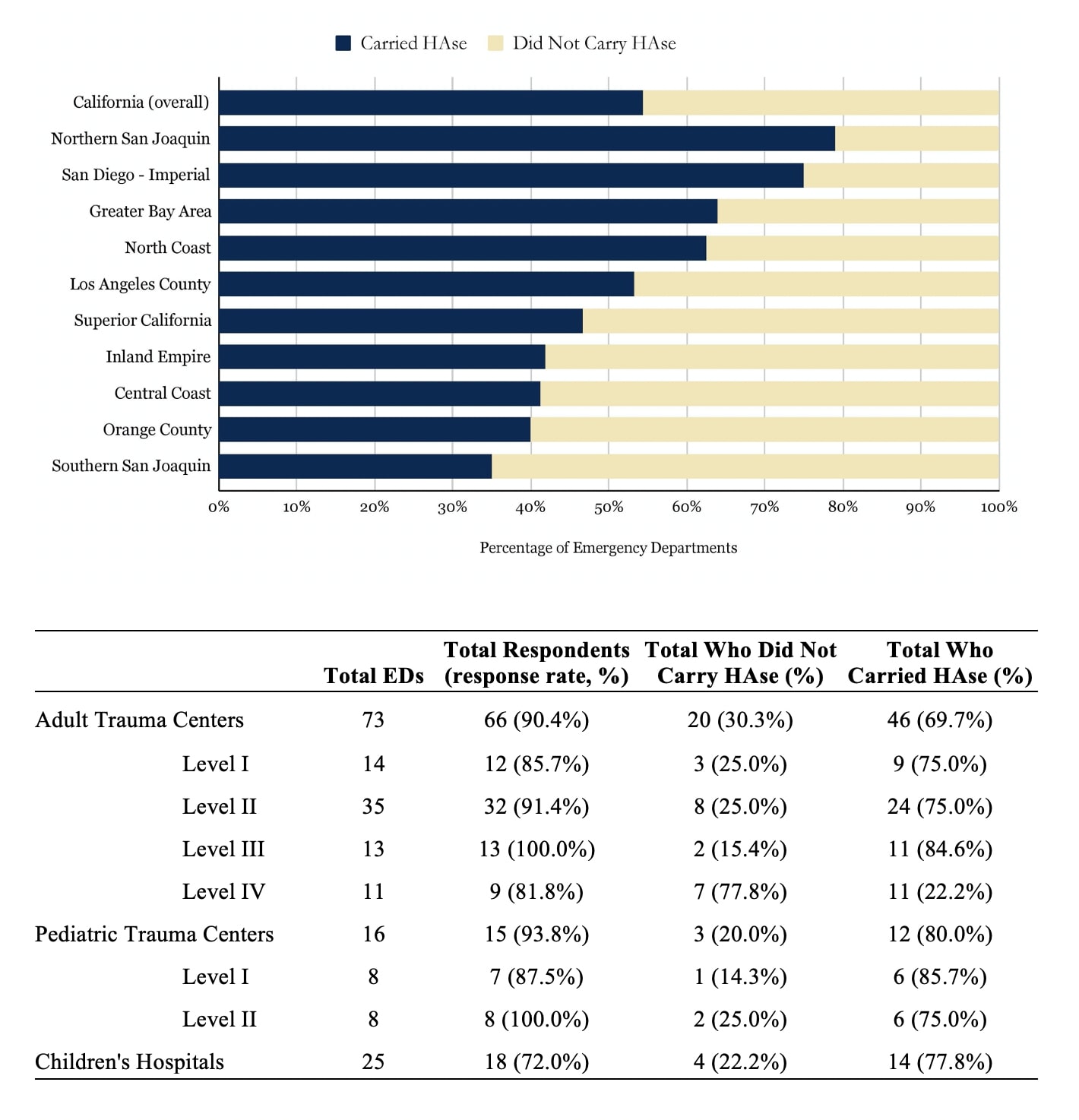
:The present study included 330 Californian ERs and achieved an 89.7% response rate (n=296). Overall, 45.6% of ERs were found to not have HAse in their pharmacy inventory. HAse availability was positively associated with level I-III adult trauma center status, pediatric trauma center status, children’s hospital status, hospitals with higher median bed counts, and regional geography (p<0.05, all).
Conclusion
:HAse availability in ERs is unreliable across the state of California, posing a risk to patient safety as ERs are often expected to function as a safety net for HA filler ischemic complications. In emergent situations for which injectors have inadequate/absent supplies of HAse, the authors recommend calling hospitals/ERs in advance to verify HAse availability. Injectors should be methodical about their calls, and prioritize according to not only proximity, but also by hospital size, trauma center designation, and availability of pediatric services.