The Quality of Information in Youtube Videos Vs. Websites for Neuromodulator and Soft-Tissue Filler Injections
Minimally invasive office-based aesthetic procedures such as neuromodulators and soft-tissue fillers have become increasingly popular in recent years due to their minimal downtime, affordable service, and fewer complications. In 2019, there were 7.7 million Botulinum Toxin Type A injections and 2.7 million soft-tissue fillers. With this growing demand of injectables, patients are utilizing social media and YouTube as one of their main sources of education on the topic. YouTube is used by more than 70% of adults and 81% of 15 to 25 year-olds. The information quality of videos related to the two most performed aesthetic procedures, Botox® and soft-tissue filler injections has not been assessed. The goal of our study was to determine the quality of information on YouTube injectable videos while also assessing which groups of contributors produce better videos. In addition, we sought to compare the quality of YouTube videos to websites identified by Google, using four of the most widely used methods of quality evaluation.
Methods/Technique
:A YouTube search for “Botox” and “Fillers” was performed in July 2020, identifying the most popular health information videos. The link, rank (video number), title, author, video category, video duration in minutes, date of initial upload, view count, number of likes, number of dislikes, and number of comments were recorded. Quality was assessed using the validated Journal of American Medical Association (JAMA), Health on the Net principles (HON), and the DISCERN criteria as well as a procedure-specific content score. The content score was designed to evaluate only the most pertinent aspects of injectables that could be displayed on video. This scoring system is less comprehensive than traditional quality scoring instruments, but allows for a more just assessment of videos. Three of the authors (AP, LM, AJ) independently scored each video and averages were used during data analysis. Quality scores were compared among different groups of video contributors to determine which authors produced higher quality videos. Furthermore, video quality metrics were compared directly against injectable websites using the same search terms on Google.
Results/Complications
:A total of 720 measurements of quality were performed across 95 YouTube videos and 85 websites. The mean (SD) quality scores were JAMA- 1.74/4 (0.718), HON- 6.66/16 (2.07), DISCERN- 40.0/80 (9.25), and content- 39.1/100 (11.9). Physician, non-physician health professionals, and other (news, magazine channels, and influencers) were all of higher quality than patient-based videos (p<.001). Video duration had no association with video quality. Video Power Index (VPI), a measure of popularity that takes into account number of views and likes, was found to have no significant difference across groups p=0.728. The mean (SD) DISCERN percentage score for videos was 50.04/100 (11.57) and significantly less than that of websites, 55.46/100 (15.74), p=.010. The mean (SD) content scores showed a similar result, 39.06/100 (11.92) vs 60.76/100 (17.65), p<.001, respectively.
When assessing the popularity of these sources, YouTube videos (16,377 (44,431.7)) were viewed more on a monthly basis than websites from Google search results (3,886.9 (11,544.9)) for aesthetic injectables, p=.009.
Conclusion
:The increasing influence of social media and YouTube videos on patients interested in aesthetic procedures necessitates high quality online health information. The current quality of information on YouTube videos is poor overall. Much improvement is needed and plastic surgeons, who are the most frequent video contributors, are most qualified to provide this change.
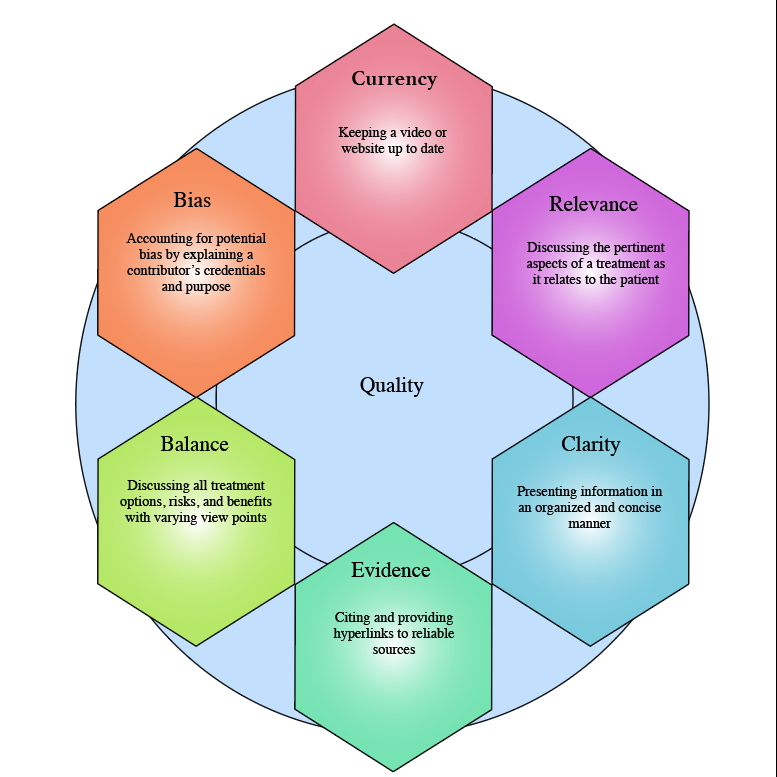
We recommend that plastic surgeons who post informational videos familiarize themselves with the six major components of quality: currency, relevance, clarity, evidence, balance, and bias. By addressing these aspects, contributors would not only improve the quality of their own content, but also help guide patients to other resources. Patients should be directed towards physician-based videos rather than patient-experience videos as they may be inaccurate and of low quality. Videos that are concise with visual aids tend to help viewers stay engaged.
As a platform, YouTube videos were found to be of lower quality than websites and are likely viewed more than websites. Therefore, physicians should focus their online presence to video-based platforms, where the viewership may be larger, and seek to increase the quality of their content by utilizing the criteria set forth by various health information quality instruments. Through YouTube there exists a unique and powerful opportunity for plastic surgeons to educate, communicate, and engage with patients in a meaningful way. The quality of this interaction, however, is only as good as the quality of information that is displayed.