Timing and Outcomes of Body Contouring Surgery after Bariatric Surgery Vs. GLP-1 Receptor Agonist-Induced Weight Loss
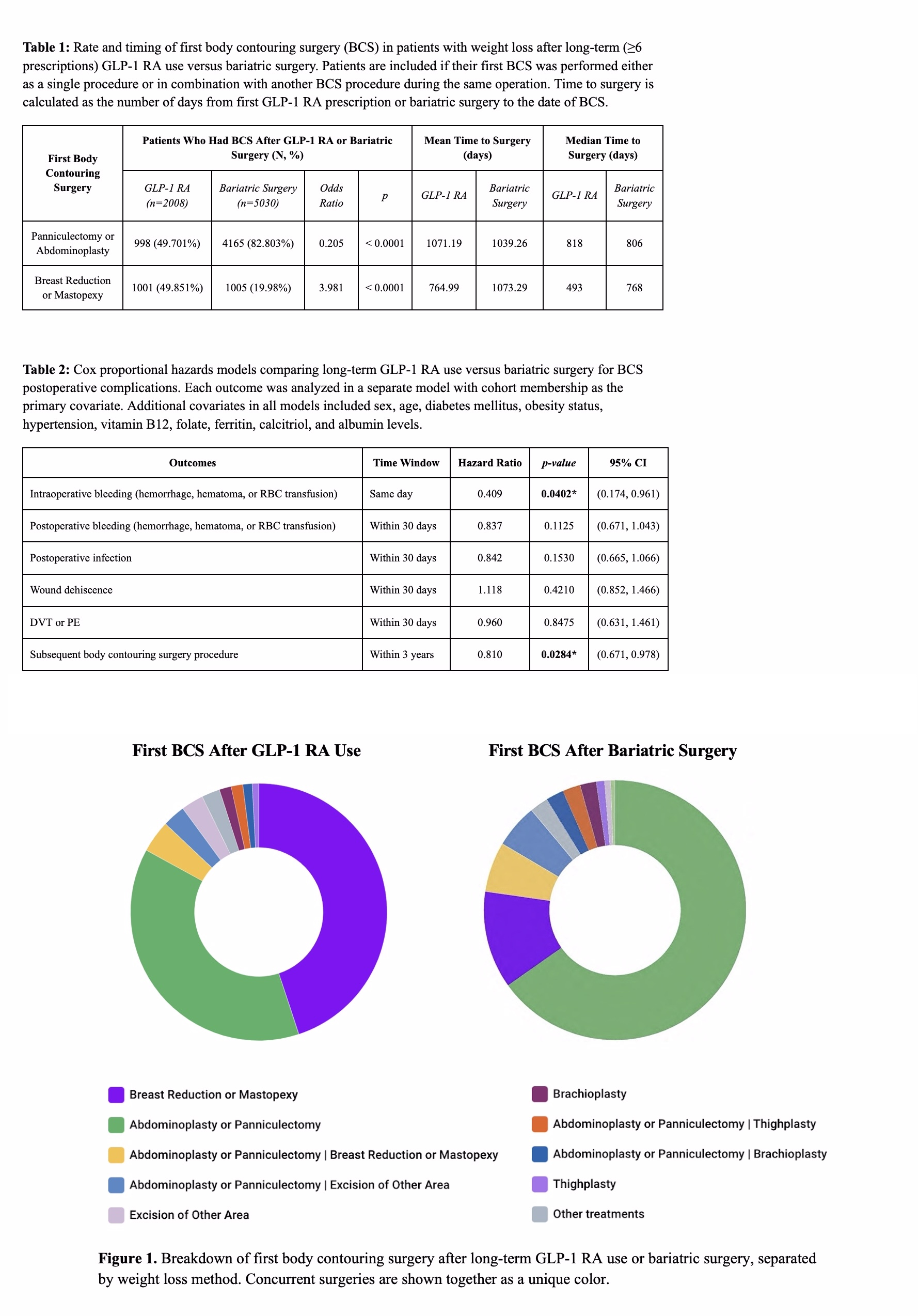
Methods/Technique: This study used the TriNetX database, a global health research platform that compiles data from electronic medical records in real time. We retrospectively identified adults (≥18 years of age) who underwent BCS after long-term GLP-1 RA use (≥6 prescriptions) or bariatric surgery. BCS procedures included abdominoplasty, panniculectomy, mastopexy, breast reduction, brachioplasty, and thighplasty. Timing to the first BCS procedure was recorded in days from GLP-1 RA initiation or the date of bariatric surgery, and proportions of BCS procedure types were compared between cohorts. Cox proportional hazards models assessed the risk of various complications, with key covariates including sex, age, diabetes, obesity, hypertension, and nutritional markers (vitamin B12, folate, ferritin, calcitriol, and albumin levels) to account for potential confounding factors.
Results/Complications: Among those undergoing BCS, GLP-1 RA users more frequently received breast reduction or mastopexy than bariatric patients (44.16% vs 11.87% of BCS), with these procedures occurring earlier on average (mean 765 vs 1073 days). Bariatric patients more often received abdominoplasty/panniculectomy (65.73% vs 39.85% of BCS) with similar timing to the GLP-1 RA cohort (mean 1073 vs 1071 days). GLP-1 RA users had a notably lower risk of intraoperative bleeding (HR 0.409, p=0.0402) and a reduced likelihood of undergoing subsequent BCS within three years (HR 0.810, p=0.0284). No significant differences were observed for postoperative bleeding, infection, wound dehiscence, or thromboembolic events (DVT or PE) between the cohorts.
Conclusion: GLP-1 RA users were more likely to undergo breast procedures and had a lower likelihood of requiring additional BCS within three years, suggesting differences in weight loss distribution or patient motivations. The reduced intraoperative bleeding risk in GLP-1 RA users may reflect fewer vascular changes and a less dense vascular network compared to bariatric surgery patients, who often experience significant remodeling of blood vessels after rapid weight loss. Tailoring surgical planning to the specific characteristics of each weight loss method may enhance patient satisfaction and long-term outcomes.