Nanoscale Surface and Elemental Composition Analysis of Breast Implant Shells
Methods/Technique: Two smooth (Allergan®, Mentor®) and two textured (Sientra®, Mentor®) silicone implants were sputter-coated with a 5nm layer of platinum and palladium to reduce charging artifacts, then imaged using a Zeiss Gemini 560 SEM at 100x and 2000x magnifications. Energy-dispersive X-ray spectroscopy (EDS) determined elemental composition on inner and outer textured surfaces to detect trace metals and assess potential effects of the texturing process.
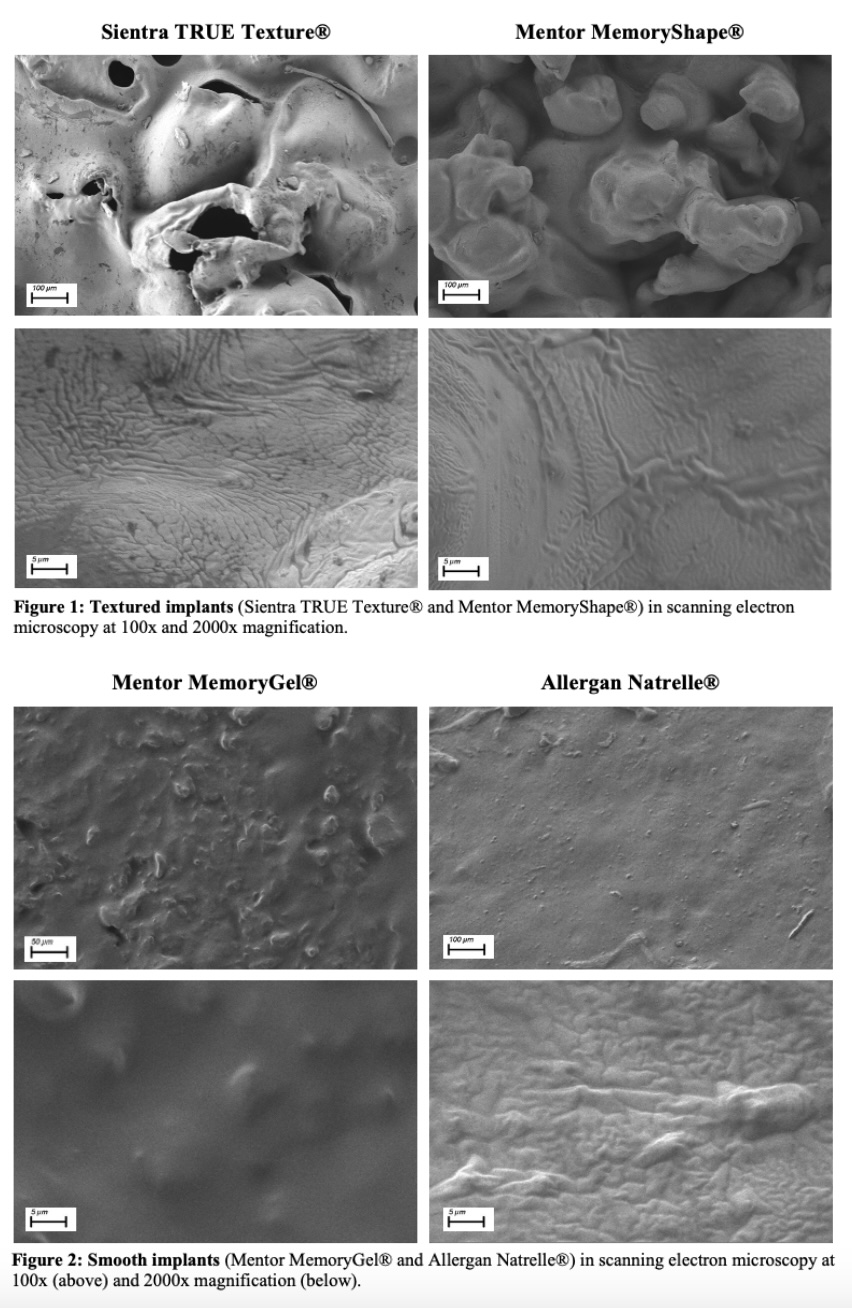
Results/Complications: The textured Sientra and Mentor implants displayed distinct microscale topographies, however both exhibited similar nanoscale wrinkling at 2000x magnification (Figure 1). The smooth Mentor implant showed small, rocky features, while the smooth Allergan implant exhibited nanoscale wrinkling (Figure 2). EDS detected carbon, oxygen, and silicon as primary elements, with no significant heavy metals and no elemental differences between inner and outer textured surfaces.
Conclusion: Both textured and smooth implants display nanoscale features that may influence fibroblast adhesion and capsular contracture. Consistent elemental composition between inner and outer shell surfaces suggests that neither texturing process alters chemical composition. No heavy metals were detected, suggesting other factors may contribute to BII.