New Contours, Different Risks: Comparing Trends and Postoperative Complications in Patients Undergoing Aesthetic Surgery with Prior Bariatric Surgery Versus Glucagon-like Peptide 1
The significant weight loss often associated with bariatric surgery or GLP-1 receptor agonist (GLP1-RA) use often prompts patients to seek aesthetic procedures to address changes in skin laxity and body contours. However, utilization trends and postoperative complication rates between these groups are not well characterized. We aimed to examine trends in aesthetic surgery utilization and compare complication rates in patients undergoing aesthetic procedures post-bariatric surgery versus GLP1-RA use.
Methods/Technique
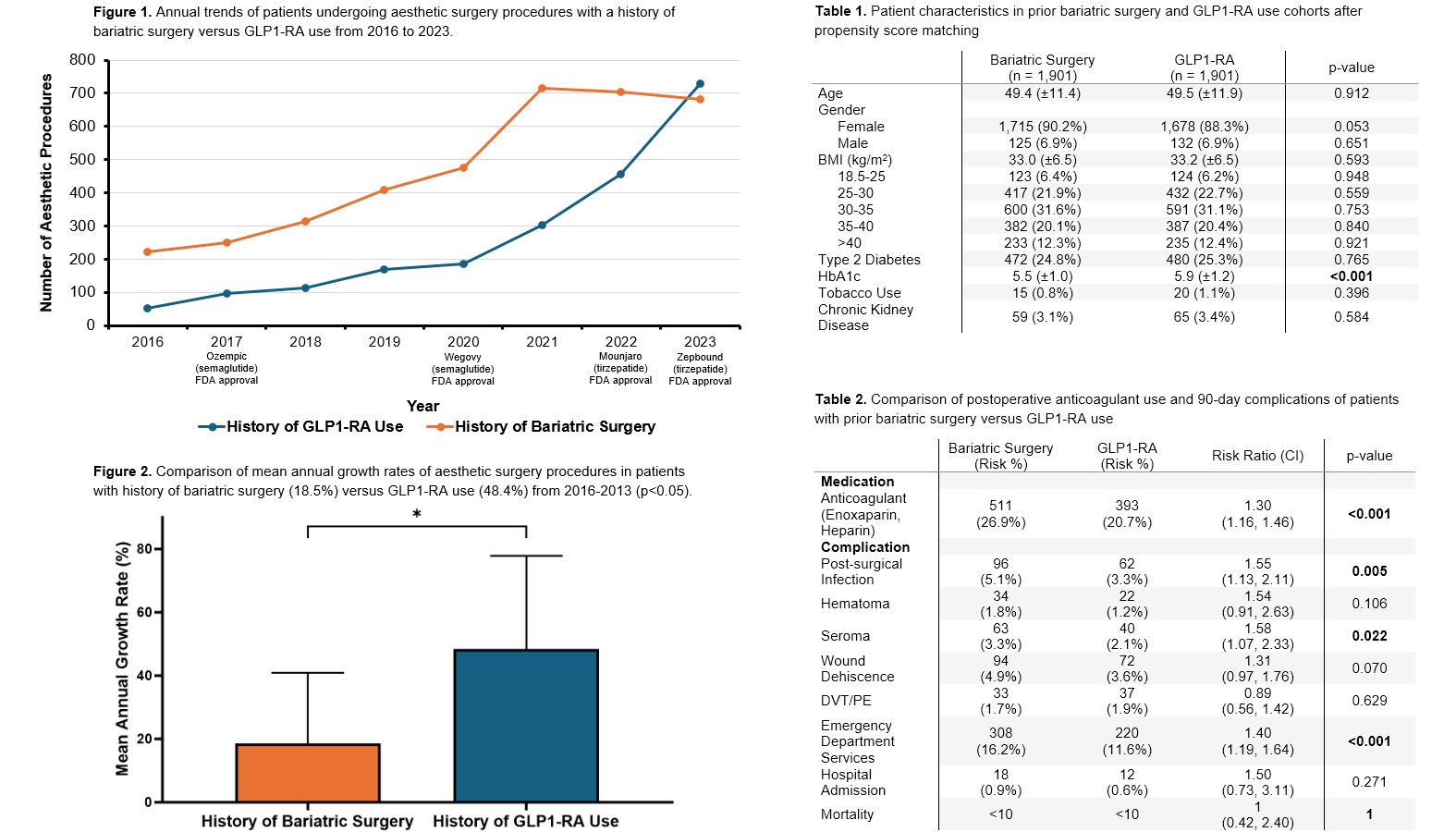
:Using the TriNetX database, we conducted a retrospective cohort study of patients with a history of BMI >30 and either exclusive history of bariatric surgery or GLP1-RA use undergoing aesthetic procedures between 2016 and present. Procedures queried included rhytidectomy, cervicoplasty, mastopexy, breast reduction, breast augmentation with implants, thighplasty, brachioplasty, glutealplasty, abdominoplasty, autologous fat transfer, dermal filler, and liposuction. Baseline demographic details including age, gender, BMI, type 2 diabetes, tobacco use, and chronic kidney disease were collected. Cohorts were stratified by history of bariatric surgery or GLP1-RA use. Mean annual growth rates of aesthetic surgeries for each cohort from 2016 to 2023 were compared using unpaired t-tests. Risk ratios compared postoperative anticoagulant use and 90-day complication rates between cohorts, including hematoma, seroma, infection, wound dehiscence, DVT/PE, emergency department (ED) use, readmissions, and mortality, after propensity score matching based on baseline demographics.
Results/Complications
:A total of 6,278 procedures were identified, with 3,795 procedures associated with a history of bariatric surgery and 2,483 associated with a history of GLP1-RA use. From 2016 to 2023, the mean annual growth rate of aesthetic surgery utilization with prior bariatric surgery was 18.5%, compared to 48.4% with prior GLP1-RA use (p<0.05). In the retrospective analysis, after 1:1 propensity score matching, 1,901 patients were included in each of the post-bariatric and GLP1-RA use groups. Baseline demographics were similar between cohorts (p>0.05). Postoperatively, post-bariatric surgery patients had greater rates of anticoagulant medication use (26.9% vs. 20.7%, p<0.05), and were 58% more likely to develop seromas (RR: 1.58 CI: [1.07, 2.33], p<0.05). Rates of hematoma, wound dehiscence, DVT/PE, readmission, and mortality were similar between cohorts (p>0.05). However, post-bariatric surgery patients were 55% more likely to develop post-surgical infections (RR: 1.55; CI: [1.13, 2.11], p<0.05) and 40% more likely to use ED services (RR: 1.40; CI: [1.19, 1.64], p<0.05) compared to GLP1-RA users.
Conclusion
:There is increasing aesthetic surgery utilization among patients with prior bariatric surgery and especially prior GLP1-RA use. This trend may reflect a shift toward non-surgical weight-loss options followed by aesthetic surgery. Patients with prior bariatric surgery had higher rates of post-surgical infection, seroma, and ED use following aesthetic surgeries. Further research is needed to clarify factors contributing to these increased complications.