How Plastic Surgeon Youtube Influencers Shape Public Knowledge of Plastic Surgery: A Study in Online Patient Education
Methods/Technique: We first identified the top plastic surgeon influencers on YouTube by conducting a comprehensive search using Google, YouTube, and Social Blade, focusing on English-speaking plastic surgeons with the highest follower counts. From this list, we selected the top ten most-followed influencers and reviewed their ten most popular YouTube videos or shorts, prioritizing content with an educational focus on surgical procedures, medical knowledge, general health, healthcare policy, or medical training. Each video was analyzed by two independent reviewers, who assessed popularity metrics—views, likes, and comments—alongside qualitative aspects including target audience, content type, format, tone, and engagement strategies. The qualitative categories were non-exclusive, allowing multiple attributes to be recorded for each video where applicable.
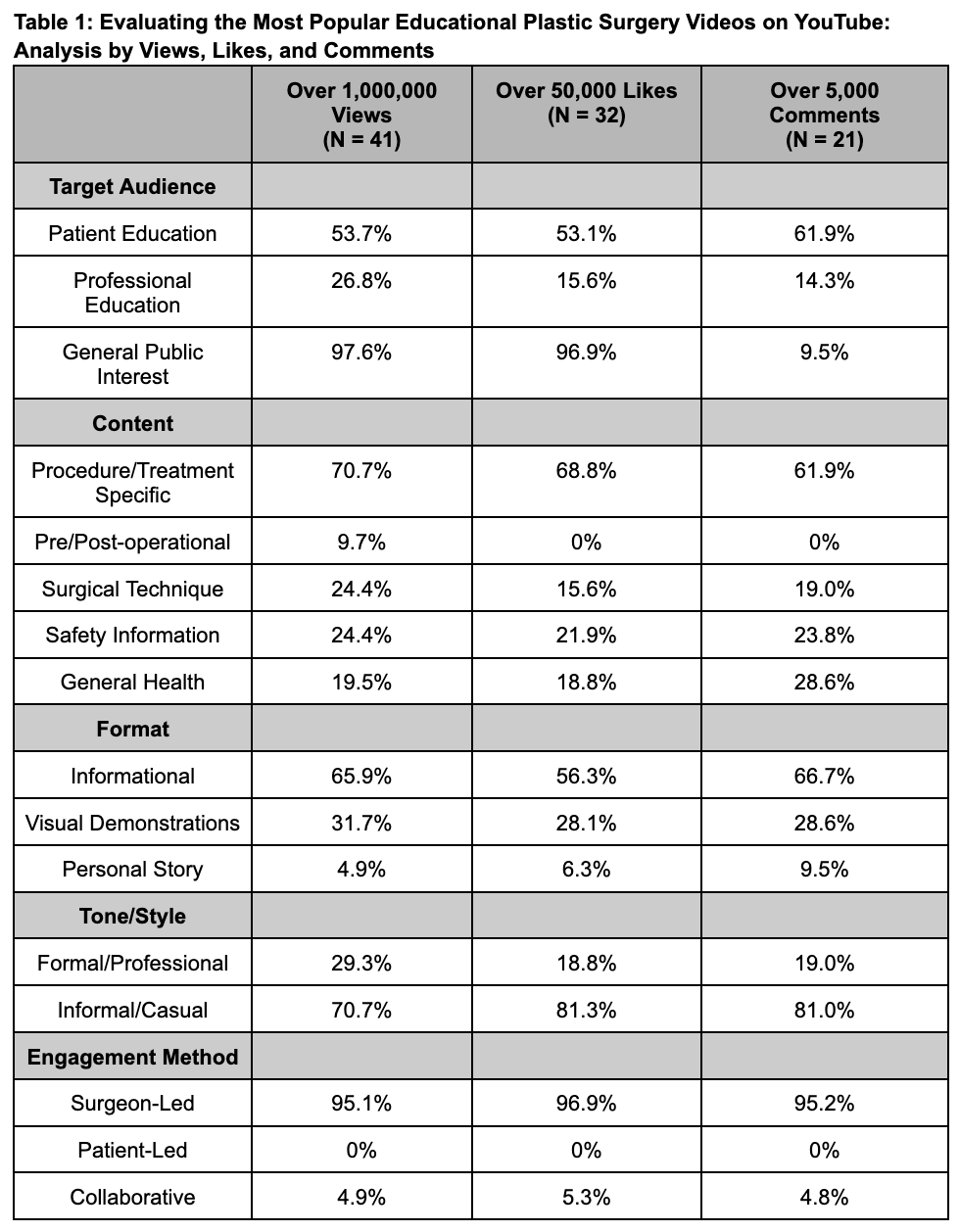
Results/Complications: A total of 100 YouTube videos were analyzed. The majority (60%) centered on patient education, with 79.5% specifically covering surgical procedures. Most videos (66.5%) adhered to an informational format, while 57.5% included visual demonstrations such as diagrams, models, or live procedural footage. An informal, conversational tone was used in 70.5% of the videos and 86% featured surgeon-led content. The videos covered a range of educational topics: 45.5% focused on professional education, 50% provided pre- and post-operative guidance, and 42.5% explained specific surgical techniques. Additionally, 10.5% of videos shared personal stories from patients discussing their experiences with aesthetic procedures. Audience engagement metrics were notable, with 41 videos surpassing 1,000,000 views, 32 receiving more than 50,000 likes, and 21 accumulating over 5,000 comments (Table 1). Among the top 10 influencers, 7 dedicated over half of their content to patient education. Dr. Anthony Youn, the most-followed plastic surgeon on YouTube, featured patient-educational content in 60% of his videos.
Conclusion: Our findings highlight YouTube's role as an impactful educational platform in plastic surgery, where influential plastic surgeons engage large audiences by focusing on patient-centered education and procedural content. With 60% of videos dedicated to patient education and 79.5% addressing specific procedures, these videos serve as a valuable resource for prospective patients seeking clarity and guidance on complex topics. The prevalent use of an informal, conversational tone (70.5%), surgeon-led presentations (86%), and focus on pre/post-operative care (50%) further enhances viewer engagement, allowing surgeons to clarify surgical procedures and foster trust. The significant portion of videos with 41 videos with millions of views and thousands of likes and comments indicate a strong public interest for credible, accessible information on aesthetic procedures. Given this reach and depth, YouTube offers plastic surgeons a unique platform to contribute to public education, set realistic expectations, and correct misconceptions. Future research should examine the direct impact of such content on patient decision-making and satisfaction, as well as explore optimal video formats for advancing public understanding of plastic surgery.