Enhancing Flap Survival in Aesthetic and Reconstructive Surgery through Exosome Therapy
Flap necrosis is a significant postoperative challenge in plastic and reconstructive surgery, often resulting from ischemia-reperfusion (I/R) injuries and insufficient blood supply. Exosomes are extracellular vesicles with regenerative properties which have emerged as a promising therapeutic option. This review evaluates and assesses the potential of exosome therapy in enhancing local skin flap survival based on current preclinical data.
Methods/Technique
:A systematic review and meta-analysis were conducted following established PRISMA guidelines. PubMed, Scopus, and Web of Science were queried for studies reporting flap survival rates after exosome administration in animal models. Data were extracted on flap survival rates, mean vessel density (MVD), TNF-α levels, and apoptosis markers (TUNEL-positive cells).
Results/Complications
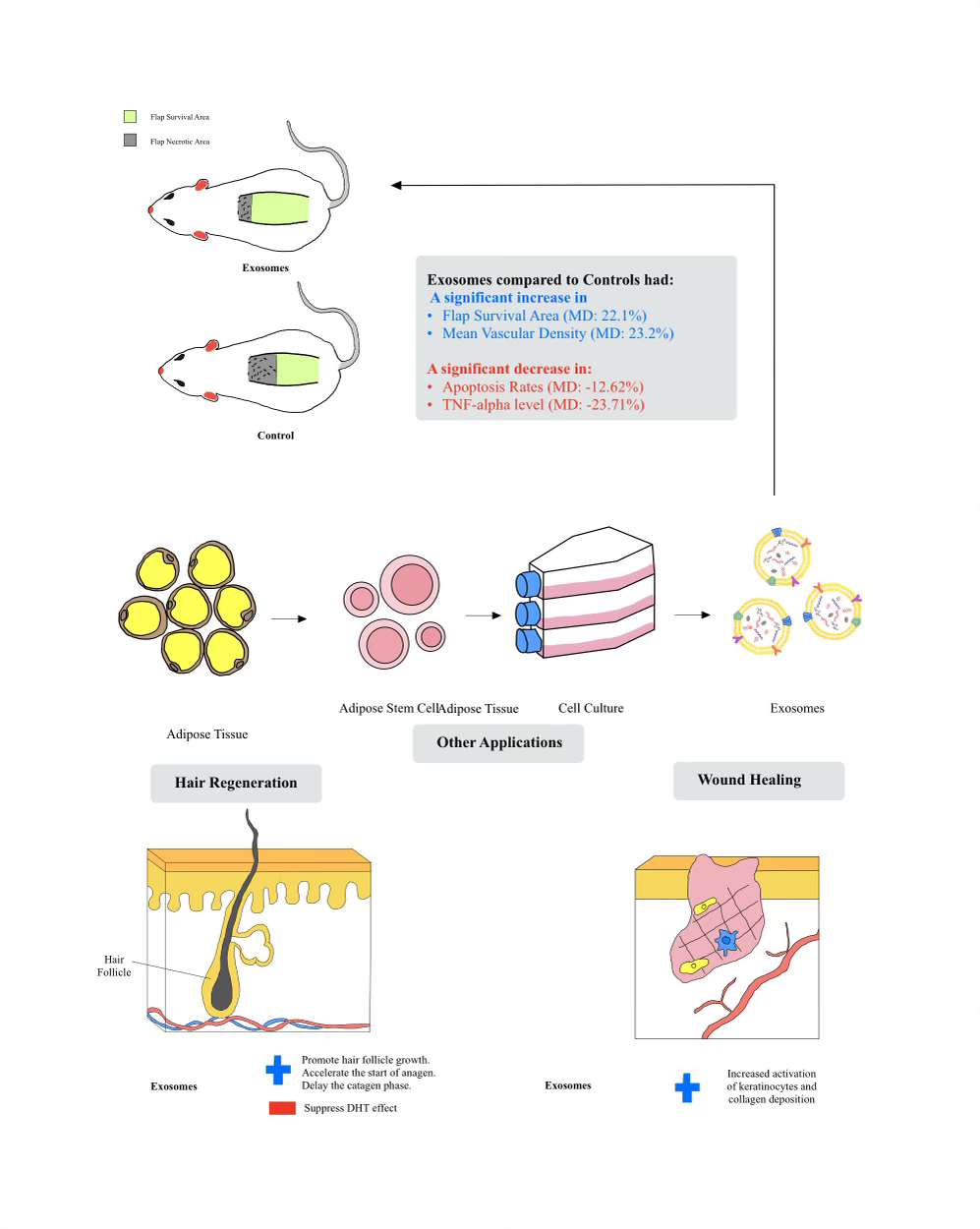
:Nine preclinical studies were included in the analysis. Exosomes significantly improved flap survival percentage compared to controls (mean difference (MD): 22.1, 95% CI: 13.97–30.23, p < 0.001). Adipose-derived stem cell (ADSC)-derived exosomes showed the highest survival rates, followed by human umbilical vein endothelial cell (HUVEC)- and bone marrow stem cell (BMSC)-derived exosomes. Exosome-treated flaps exhibited increased MVD (MD: 23.20, 95% CI: 10.94–35.47, p < 0.001), reduced TNF-α levels (MD: -23.71, 95% CI: -26.88 to -20.54, p < 0.001), and lower rates of apoptosis (MD: -12.62, 95% CI: -15.82 to -9.42, p < 0.001).
Conclusion
:Exosome therapy holds promise to foster flap survival by cultivating angiogenesis, mitigating inflammation, and inhibiting apoptosis. While preclinical studies show encouraging results, further research and clinical trials are needed to establish the efficacy and safety of exosomes in aesthetic and reconstructive surgery.