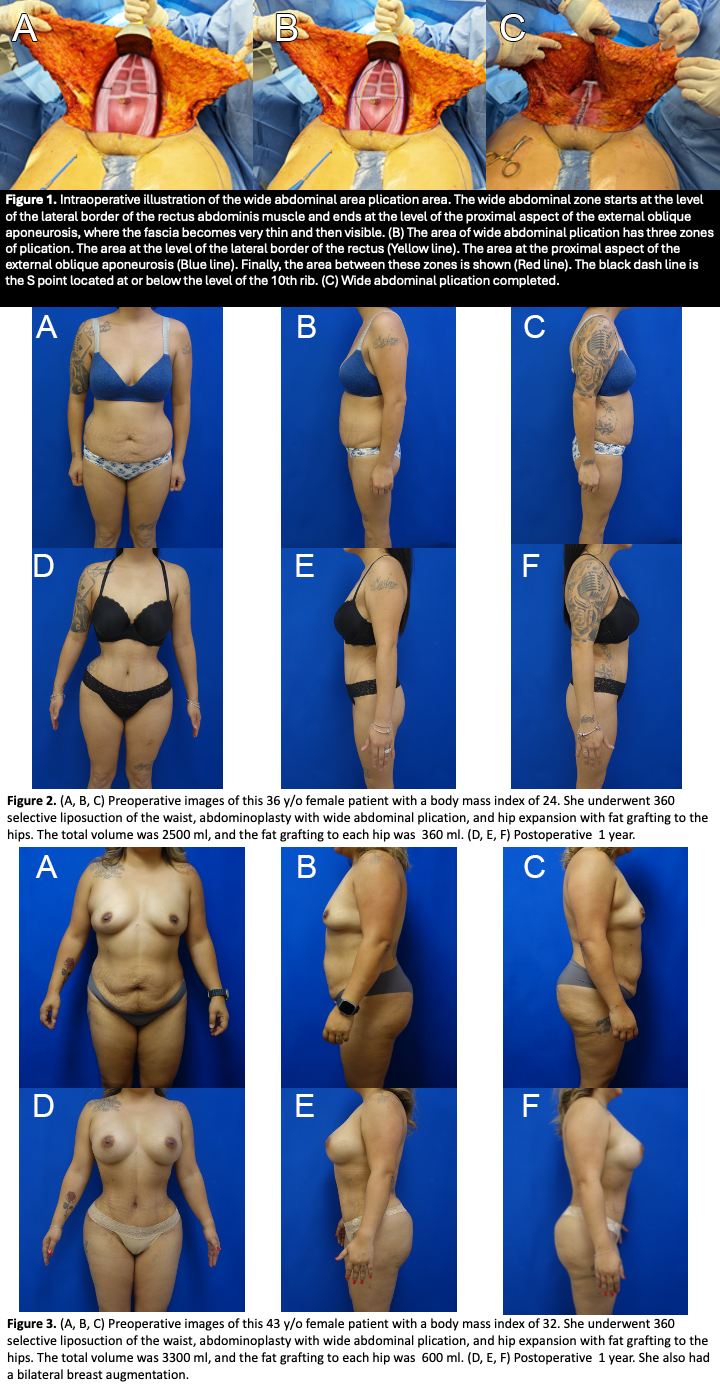
Wide Abdominal Plication Zones and Anatomy to Address Waistline Contour.
The anatomy of the zone of wide abdominal plication has yet to be fully explored. Following liposuction, wide abdominal plication is an additional technique to enhance the hip-to-waist ratio. The anatomical area for wide abdominal plication can be divided into three zones, from medial to lateral, each potentially having different effects on waistline improvement. The authors present their experience in waistline contouring, using wide abdominal plication as the second crucial factor that must be addressed for optimal waistline enhancement. These include:
- The muscles' tightening is based on the wide abdominal plication zones and intraoperative findings, such as the thickness of the external oblique aponeurosis.
- In certain situations, simultaneously plicating different zones of the abdominal wall can reduce complication rates, including potential increases in intra-abdominal pressure and breathing anomalies.
Methods/Technique: Medical records and CosmetAssure insurance claims of patients who underwent abdominoplasty with wide abdominal plication combined with hip expansion by fat grafting from January 2, 2019, to September 13, 2023, were analyzed. Photos documenting progress were taken before the procedure and during follow-up visits at one, three, six, and eight months, if possible, after one year.
Results/Complications: A total of 864 consecutive cases were identified. The average age was 39 (maximum 61 years, minimum 22 years). Average body mass index (BMI) was 29 (maximum 42, minimum: 21) Complications noted were as follows: hematoma (3, 0.3%), pulmonary embolism or deep vein thrombosis (2, 0.2%), symptomatic anemia necessitating transfusion (3, 0.3%), surgical site infection (14, 1.6%), slow wound recovery or abnormal scar formation (71, 8.2%), urinary retention (5, 0.6%), standing cone deformity needing revision (4, 0.5%), seroma (3, 0.3%), and various medical complications (15, 1.7%). There were no major cases of abdominoplasty flap necrosis however there were 5 (0.6%) cases of distal tip necrosis less than one centimeter requiring excision and re-advancement of the abdominal flap. There were no changes in pulmonary function or physiological changes except transient tachypnea in some patients, which resolved within 48 hours. In 5 patients, we measured intra-abdominal pressure; the pressure never exceeded 15 mmHg, and no cases of intrabdominal compartment syndrome occurred.
Conclusion: Wide abdominal plication is a powerful technique that can be combined with liposuction to decrease the waistline. The wide abdominal plication zones need to be evaluated intraoperatively and plicated accordingly to improve the waist-to-hip ratio and avoid complications such as significant respiratory changes that might lead to respiratory alkalosis and increased intrabdominal pressure. The authors state the anatomy of the wide abdominal applications and their role in waistline contouring. This technique can be used in different types of abdominoplasties and even in patients who do not need standard abdominoplasty but only a wide abdominal plication to improve the female silhouette.